
 17°C / 63°F
Sunny
|
Current time: 15:21
|
06:27
17:52
17°C / 63°F
Sunny
|
Current time: 15:21
|
06:27
17:52
Kyoto is a historic city located in the Kansai region of Japan and serves as the capital of Kyoto Prefecture. It has a population of approximately 1,431,419 inhabitants. Founded in 794 as Heian-kyō, Kyoto became the imperial capital of Japan and remained so for more than one thousand years until the capital was moved to Tokyo in 1868. As the political and cultural heart of Japan for centuries, Kyoto played a central role in the development of Japanese religion, art, literature, and architecture.
The city is renowned for its well-preserved temples, shrines, and gardens, including Kinkaku-ji (the Golden Pavilion), Fushimi Inari Taisha, and Kiyomizu-dera, many of which are designated UNESCO World Heritage Sites. Kyoto is also associated with traditional crafts, tea ceremony culture, and geisha districts such as Gion. Among notable individuals born in Kyoto is Yasunari Kawabata, recipient of the 1968 Nobel Prize in Literature.
Kyoto in Japan
135.8° E
Kyoto Population Evolution
The population of Kyoto in 2026 is estimated to 1,419,450 inhabitants. This estimate is taken from our extrapolation of available data and not an official estimate.
Population Summary
| Year | Population | Change |
|---|---|---|
| 1873 | 238,663 | |
| 1940 | 1,127,870 | +372.6% |
| 1970 | 1,427,376 | +26.6% |
| 1995 | 1,470,902 | +3.0% |
| 2022 | 1,448,964 | -1.5% |
Interactive Map of Kyoto
What to see in Kyoto
Kiyomizu-dera Temple
Kinkaku-ji Temple
Fushimi Inari-taisha
Mount Hiei
Ginkaku-ji Temple
Kyōto Station
Kyoto Imperial Palace
Ryōan-ji Temple
Tō-ji Temple
Nijō Castle
Famous People Born in Kyoto
Yasunari Kawabata
screenwriterJapanese novelist
Tasuku Honjo
physicianDaisuke Matsui
association football playerSister Cities of Kyoto
Sister cities, also known as twin cities, are formal partnerships between cities in different countries to promote cultural and commercial ties.
This list is based on publicly available structured data and may differ slightly from official municipal publications.
| City | Country | Population |
|---|---|---|
| Istanbul | 🇹🇷 Turkey | 15,655,924 |
| Xi'an | 🇨🇳 People's Republic of China | 12,952,907 |
| Qingdao | 🇨🇳 People's Republic of China | 10,071,722 |
| Kyiv | 🇺🇦 Ukraine | 2,952,301 |
| Konya | 🇹🇷 Turkey | 2,232,374 |
| Paris | 🇫🇷 France | 2,113,705 |
| Prague | 🇨🇿 Czech Republic | 1,397,880 |
| Guadalajara | 🇲🇽 Mexico | 1,385,621 |
| Cologne | 🇩🇪 Germany | 1,087,353 |
| Vientiane | 🇱🇦 Laos | 948,487 |
| Zagreb | 🇭🇷 Croatia | 767,131 |
| Boston | 🇺🇸 United States | 675,647 |
| Huế | 🇻🇳 Vietnam | 652,572 |
| Florence | 🇮🇹 Italy | 360,930 |
| Jinju | 🇰🇷 South Korea | 337,230 |
Books about Kyoto
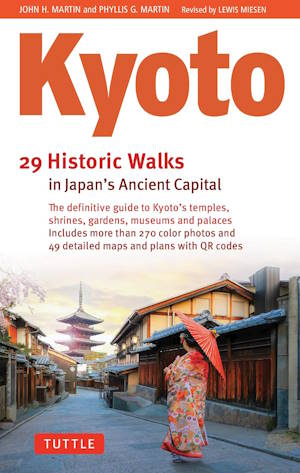
Kyoto, 29 Historic Walks in Japan's Ancient Capital
Organized around 29 walking tours, this guide explores Kyoto’s historic districts, shrines, and UNESCO sites with maps and context.
View Book
Kyoto City of Zen: Visiting the Heritage Sites of Japan's Ancient Capital
A richly illustrated guide that introduces Kyoto’s principal temples, gardens, and cultural traditions through the lens of its historic and spiritual character.
View Book
Houses and Gardens of Kyoto
A visual and architectural exploration of Kyoto’s traditional homes and landscape aesthetics through photography and text.
View Book